

The Ultimate Guide to Ford EV Home Charging

Purchasing an electric car can be one of the most freeing experiences you can manage, primarily because of the flexibility provided to you by the Ford EV charger. Instead of relying on gas stations and constantly fluctuating prices, you can be confident in your vehicle's ability to enjoy its maximum range whenever you take it to a wall outlet or charging station. Understanding how a Ford EV home charger works can let you more easily plan your day around charging your F-150 Lightning or Mustang Mach-E.
At Jones Ford Wickenburg, we've seen hundreds of customers drive off in a Ford EV and helped as many choose the home EV charger that fits their new vehicle. Let's review how Ford makes home – and public – charging straightforward.
Ford Home Charging Station Benefits, Summarized
- By charging at home, you can always wake up to a full "tank."
- When you schedule charging times with FordPass, you can further reduce your overall spending on your vehicle.
- EVs benefiting from a Ford Level 2 charger reach full capacity in just a few hours, compared to the longer period of a Level 1 charger.
- Depending on your commute, you'll save hundreds of dollars on refueling annually – even with a higher electric bill.
- New bill credits and incentives can make Level 2 charging even more affordable.
Does the Ford EV Come With a Charger?
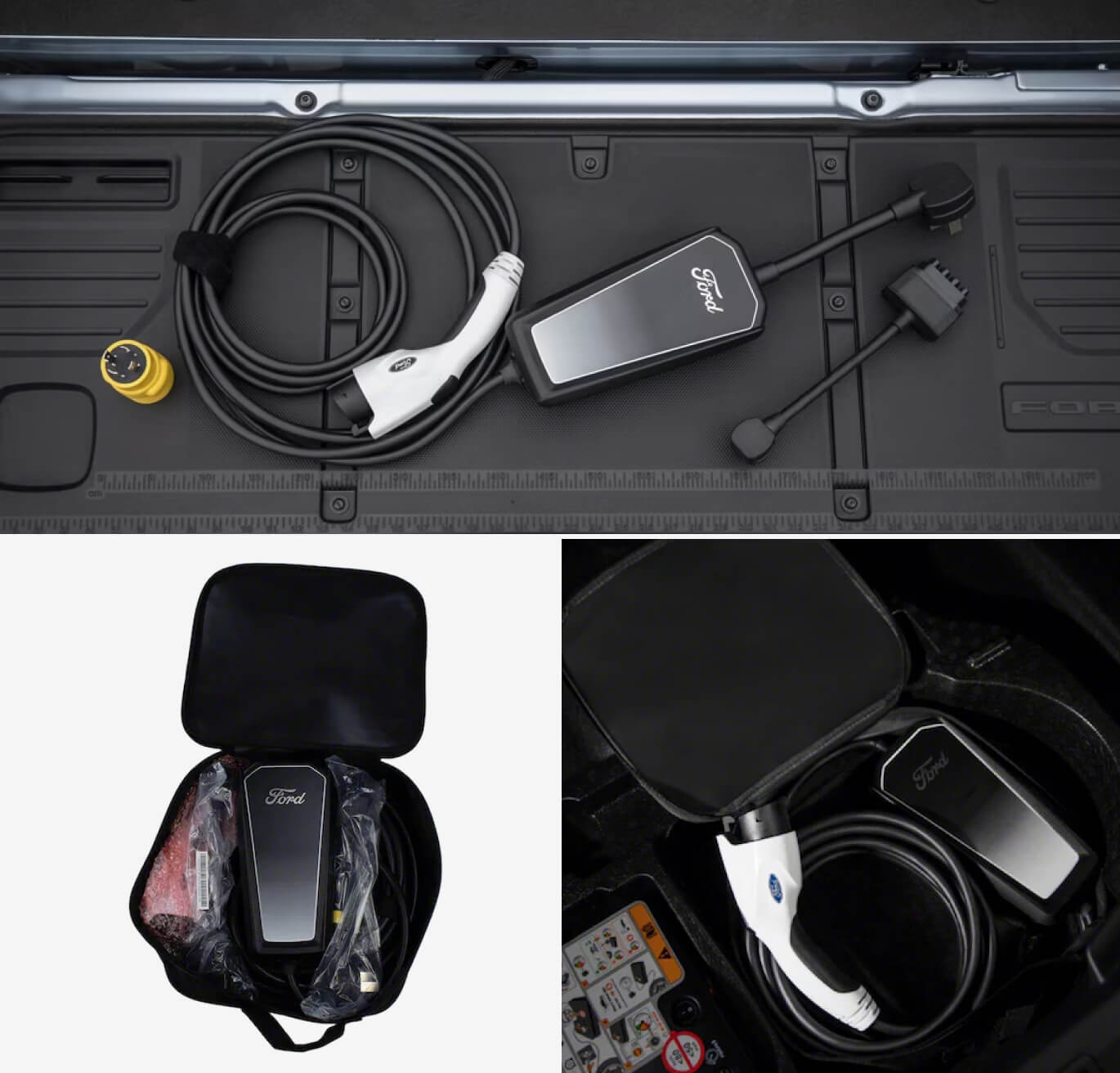
Let's start with the default equipment with your F-150 Lightning and Mustang Mach-E: the Ford Mobile Charger. This cable is designed to plug into 120-volt and 240-volt outlets, getting you back onto the road when you charge at home outlets or Level 2 stations.
You can have one of these higher-power Ford EV chargers installed at your home as part of purchasing an EV. The Ford Charge Station Pro and Ford Connected Charge Station each provide a much faster charge time than what is possible in a standard home outlet. However, ask our team about complimentary services regarding Level 2 stations. As of this writing, you can typically install a Ford Charge Station Pro at your home when you lease or finance your next EV.
How Viable is Electric Car Charging at Home?
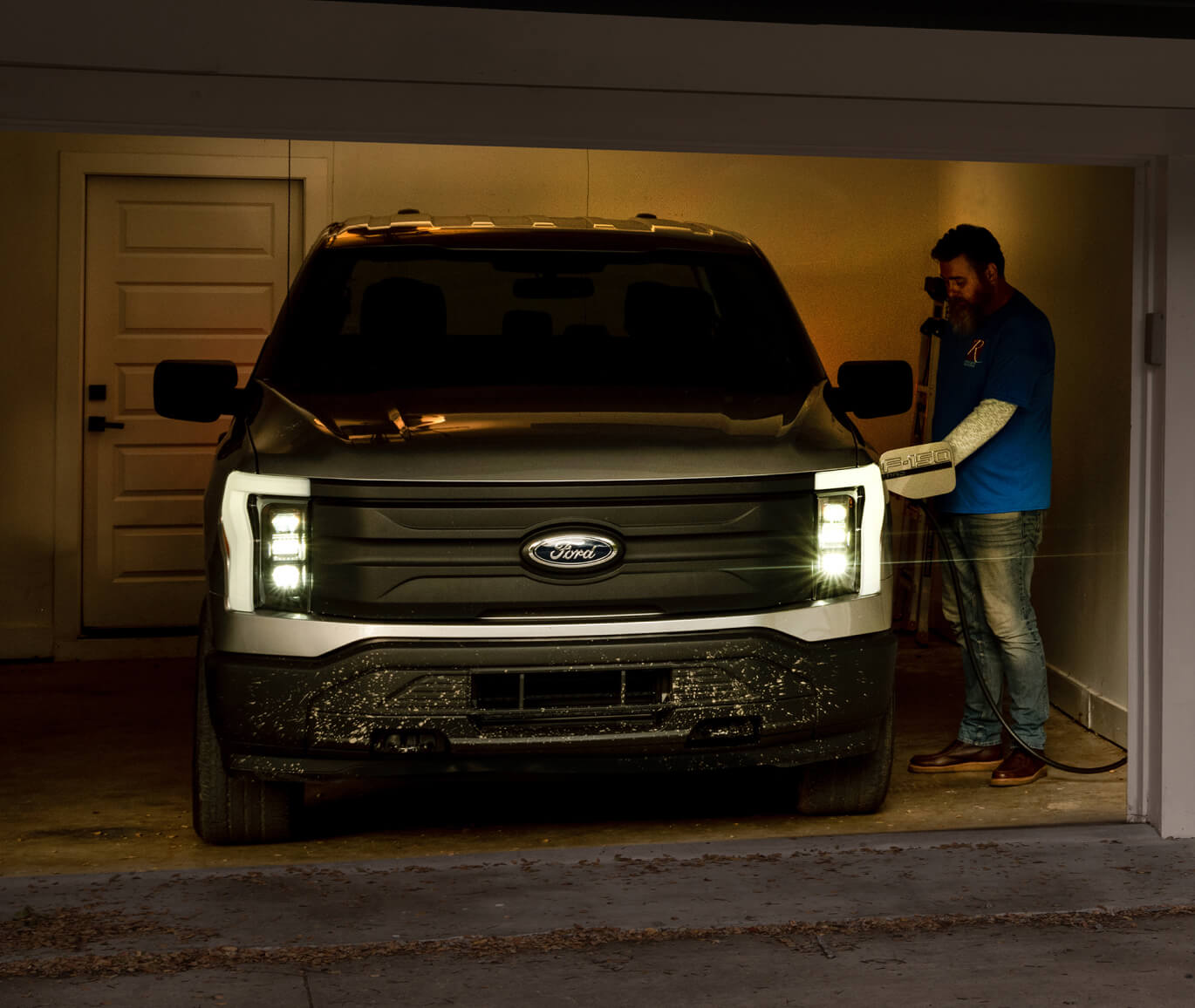
When you purchase a Level 2 charger, you unlock your EV's full potential. The 2024 F-150 Lightning, for example, has a maximum range of 320 miles.1 Even if you drained that battery to 1% every day, you can charge it to full within nine hours at a Ford Charge Station Pro.2
When you visit a friend's house, you can use the standard Ford charger to top off your battery by plugging it into a standard outlet. While not recommended for charging from 0% to 100%, this extra functionality can keep you at comfortable battery strength while visiting relatives or the office.
Level 1 vs. Level 2 vs. Level 3 Charging Station Speed
As mentioned above, Level 1 and 2 outlets are critical for battery health. Depending on the strength of your Ford car charger, you can get back on the road in a flash.
The Best Ford Charger: Car Recharge Times, by the Numbers |
|||
|---|---|---|---|
| Station Type | Charging Time | Charger Examples | Can You Install One At Home? |
| Level 1 | Over 24 hrsct | Standard wall outlet | Typically comes with homes |
| Level 2 / Plug-In |
|
Level 2 Charging Station in work garage | Yes |
| Level 2 / Wired-In |
|
Ford Connected Charge Station | Yes |
| Level 3 / DC Fast Charging | 45 minsct | DC Fast Charger outside of rest stop on freeway | No |
Your Ford EV's standard mobile power cord can handle Level 1 and 2 stations. However, charging from a wall outlet only gets your battery full with some time, and standard Level 2 plug-in chargers take nearly a day to recharge your Ford EV to full.2
We highly recommend installing a Ford Charge Station Pro for your F-150 Lightning or a Ford Connected Charge Station for your Mustang Mach-E. These specialized chargers reduce the charge time for the F-150 Lightning by 12 hours, or three hours for the Mustang Mach-E.2 A wired-in electric vehicle charger is perfect for the day-to-day commuter who wants their EV to be at 100% overnight, no matter how far you drove beforehand.
For those who want to explore the world in a planet-friendly workhorse, visit a DC Fast Charger. Typically positioned along the highway, these Ford fast charger stations can recharge your Ford EV within an hour.2 They aren't viable for home charging and shouldn't be used too often for the health of your battery, but they are ideal for letting you grab a bite to eat during a road trip and then take off with a full charge.
How to Install a Ford Home Charger
Now that you know how much faster using a Level 2 charger is, you might wonder what that process will look like.
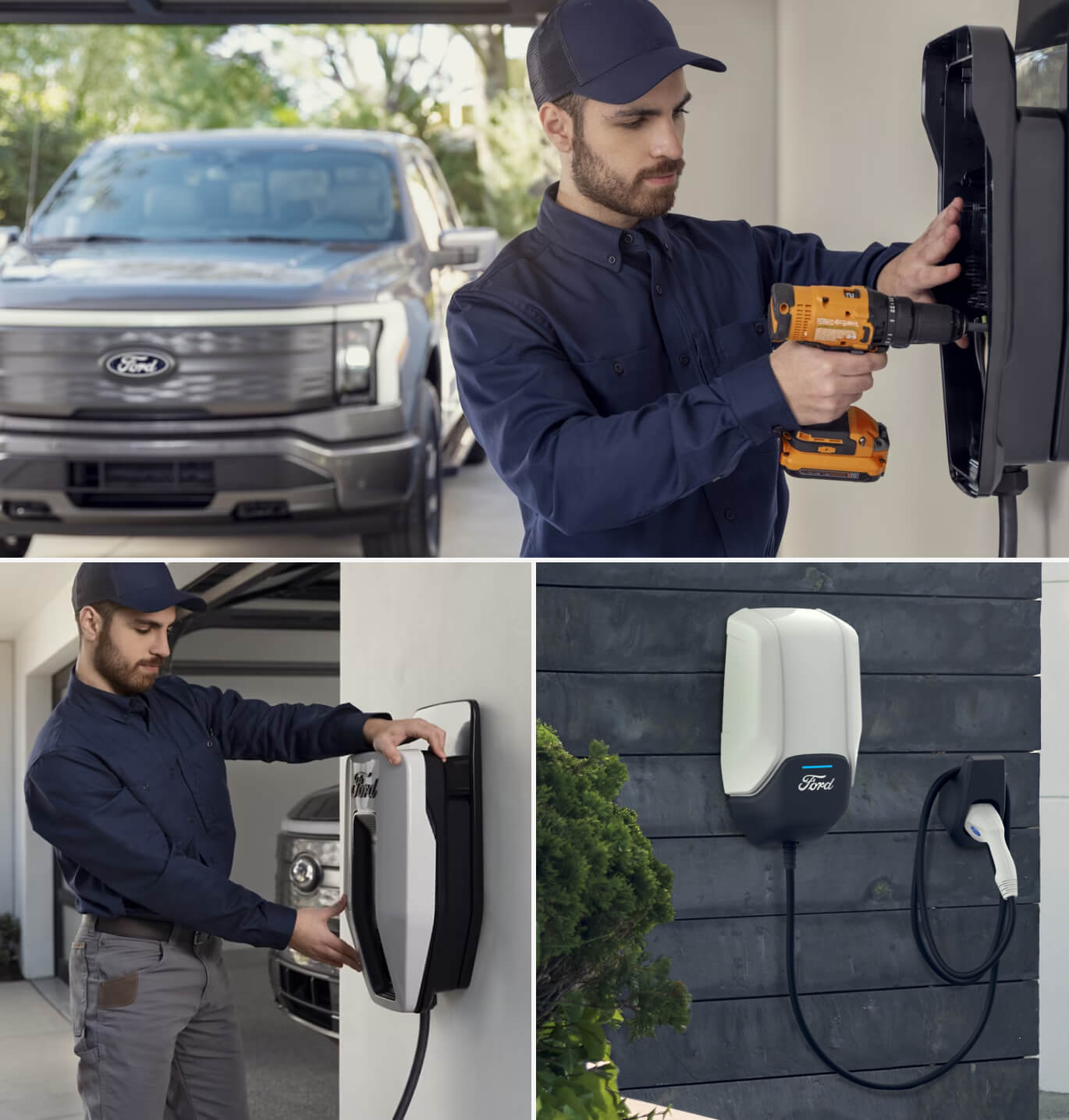
- You purchase the Ford Charge Station Pro or the Ford Connected Charge Station. Alternatively, you may be able to benefit from a complimentary installation service when you finance a Ford EV during designated periods.
- A technician installs your charger in an accessible area near your breaker, following the installation method checklist provided in the Installation Guide.
- You check if the charger works by using your Ford Mobile Power Cord.
Depending on how your system is installed, your EV home charger can function as a generator if your home loses power by rerouting energy from your vehicle's battery.
The Cost of a Ford Charging Station
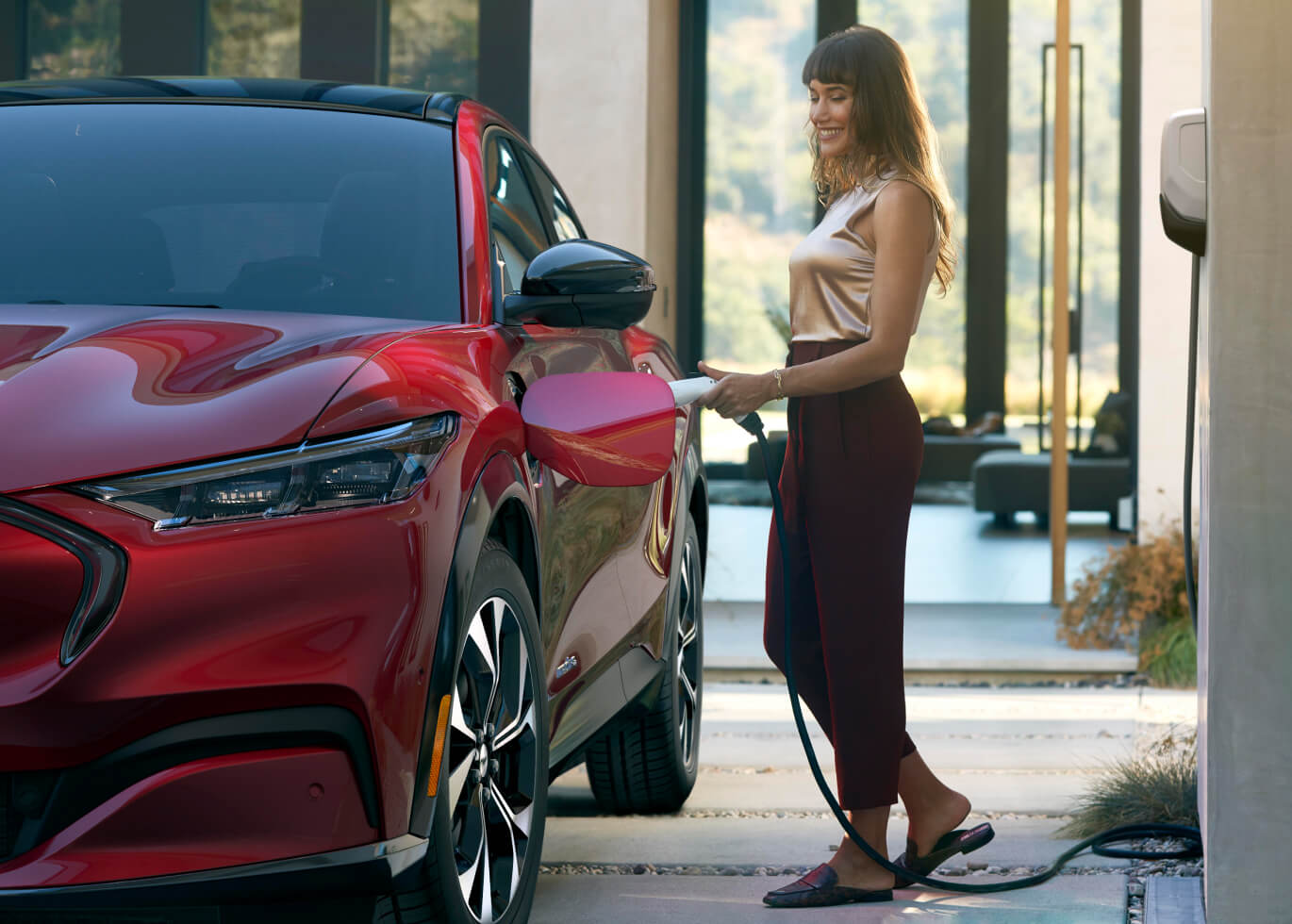
After installation, the Ford EV charger pays you back dividends. Compared to gas vehicles, it is estimated that you'll save up to $2,641.17 over three years recharging an F-150 Lightning compared to filling an F-150 XLT.3 Add on the current government incentive of $7,500 for qualifying models and drivers,4 various credits for electric services, and the FordPass app's ability to schedule charging periods, and your wallet will thank you for going green.
Learn More About EV Home Charging Stations with Jones Ford Wickenburg
The team at our Wickenburg, AZ, location has helped customers like you shop for Ford EV models to find options that balance work and play. Like our gas trucks and SUVs, our EVs are uncompromising in power, performance, and style. Once you get behind the wheel of one yourself, you'll see why being able to keep it charged at home is incredible for the planet and your sense of adventure.
If you want to electrify your ride without eliminating gasoline, we have options! PHEVs like the Ford Escape Plug-in Hybrid utilize hybrid technology to enhance your already impressive gas engine, reducing your carbon footprint without requiring a significant lifestyle change.
Frequently Asked Questions
How long does it take to charge a Ford EV at home?
The charge time of your Ford EV depends on your model and charging station. If plugged into a wall outlet, your EV will likely acquire a full charge over 48 hours,2 making wall outlets better for topping off. Ford professionals can install Level 2 chargers at your home, charging your EV in nine or 11 hours for the F-150 Lightning and Mustang Mach-E, respectively.
Can I schedule charging times?
Yes, through the FordPass app, it is possible to limit your charging to specific battery levels. From the home menu, click the lightning bolt icon in the bottom center, go to the "Charging" header, and click "Target Charge." This lets you set limits for specific charging stations, like 80% at a DC Fast Charging station, to help promote the lifespan of your all-electric powertrain.
How does home charging affect my electric bill?
While your electric bill will go up from charging at your home, it is unlikely to be higher than the cost to refuel an all-gas vehicle that drives the same distance. In addition, opportunities – like the TXU Free EV Miles program – can reduce the price of charging at home through credits on your energy bill. To learn more about the credits you may qualify for, contact us!
1EPA-estimated driving range based on full charge. Actual driving range varies with conditions such as external environment, vehicle use, vehicle maintenance, high-voltage battery age and state of health.
2Based on full charge. USA EPA-Est. range based on analytical projection consistent with US EPA combined drive cycle. Actual range varies with conditions such as external environment, vehicle use, vehicle maintenance, high-voltage battery age and state of health.
3Based on comparison between 2024 F-150 Lightning® Pro/XLT with an EPA-est. combined consumption rate of 49 kWh/100 miles and 2024 F-150® 3.5L EcoBoost® 4x4 with an EPA-est. combined rating of 19 MPG. Assumes 10,000 miles per year, 3-month rolling average gasoline cost $3.14/gallon and residential electricity cost of $0.1576/kWh as provided by AAA and U.S. EIA (latest data available as of May 2024), with all charging carried out at home. Actual savings will vary with conditions such as external elements, driving behaviors and mix of city/highway driving, vehicle maintenance, fuel and electricity prices, charging habits, and lithium-ion battery age.
4Please consult with your own tax or legal professional to determine eligibility, specific amount of incentives or rebates available. The amount of your tax savings will depend on your individual tax circumstances. The Inflation Reduction Act, effective as of August 16, 2022 and pending further IRS guidance, introduces additional requirements for federal tax credit eligibility. This information does not constitute tax or legal advice.